
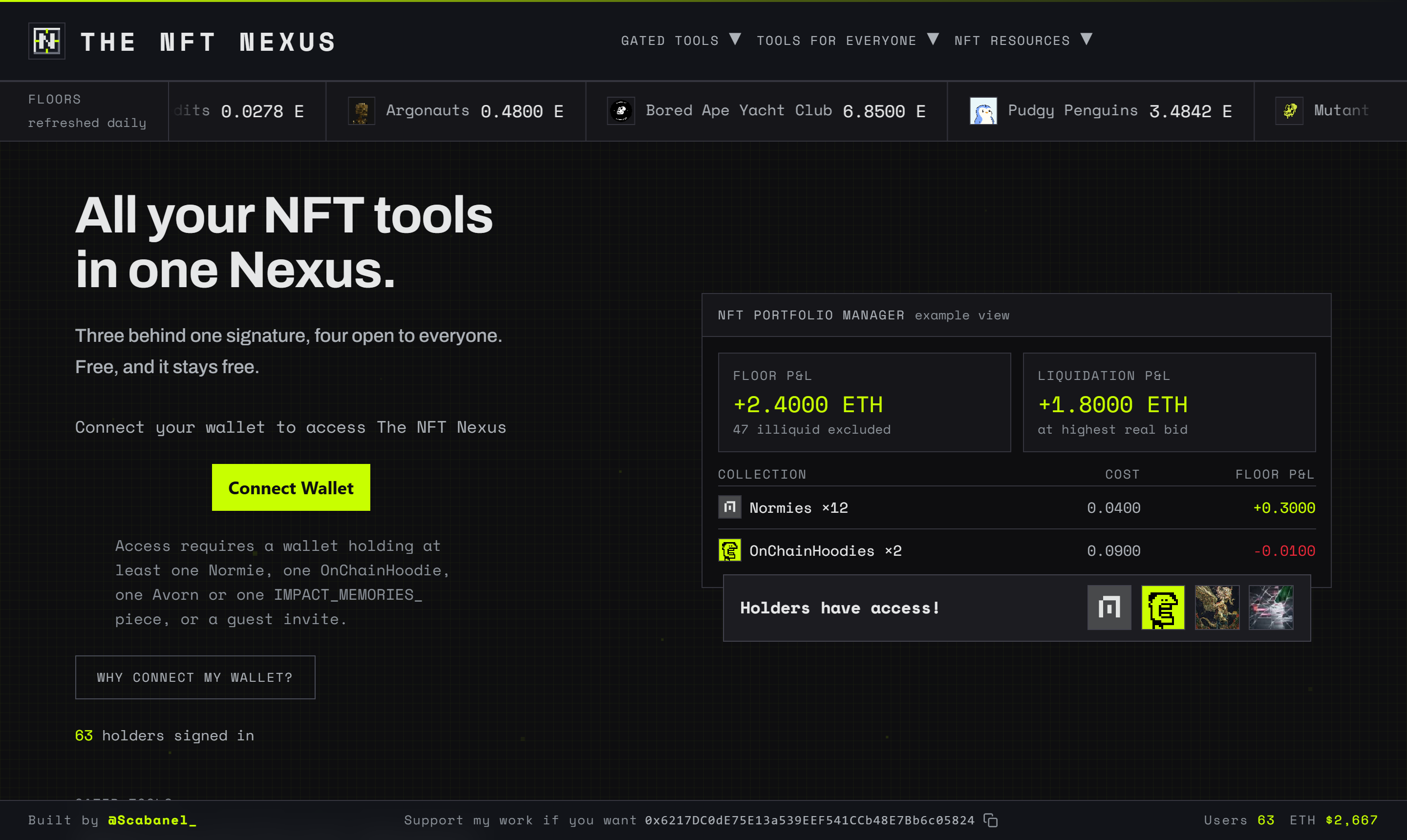
March 2026, it had been two months since I started getting interested in the NFT market. First to turn it into a video topic for my YouTube channel, then out of genuine interest in the ecosystem. I was in a chat group with about fifteen French-speaking collectors and builders around an NFT collection, the Normies.
I found it complicated to get a precise, complete view of the whole catalog of transactions between multiple crypto wallets, whether for pure cryptos or especially for NFTs.
I decided to create a tool that would later become NFT Nexus.
The tool ended up winning the community hackathon I just mentioned, netting me $1,000.
I’m sharing this story because it goes far beyond Web3. You’ve probably never heard of the Normies, and that’s fine.
What matters and what will interest you is the product-marketing approach and co-development with Claude Code, and the problems it solves today for the companies I work with as a CMO.
What is the product and what does it do?
The product is called NFT Nexus.
It’s a suite of free tools for NFT holders:
A portfolio manager that aggregates multiple wallets and blockchains to show, on a single page, what you own and what it’s really worth.
A tool that calculates your real profit or loss, transaction by transaction, not a guess based on the current floor price.
A bot that alerts you before the mint (the chance to buy the NFT when the project launches) of a major NFT project closes.
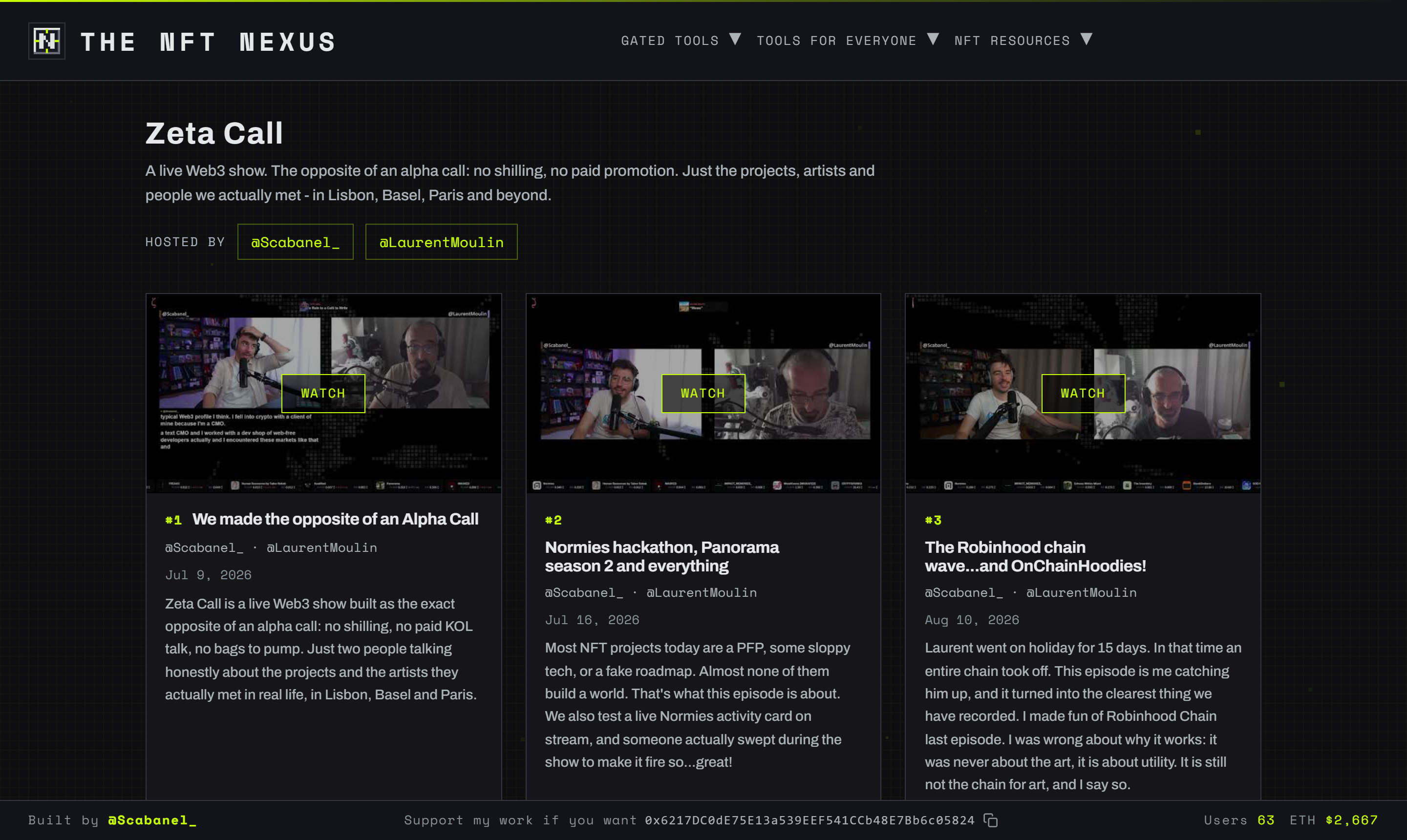
And a few more public-facing, community-oriented tools (also useful for content creation) like a 3D world where the community’s NFTs live.
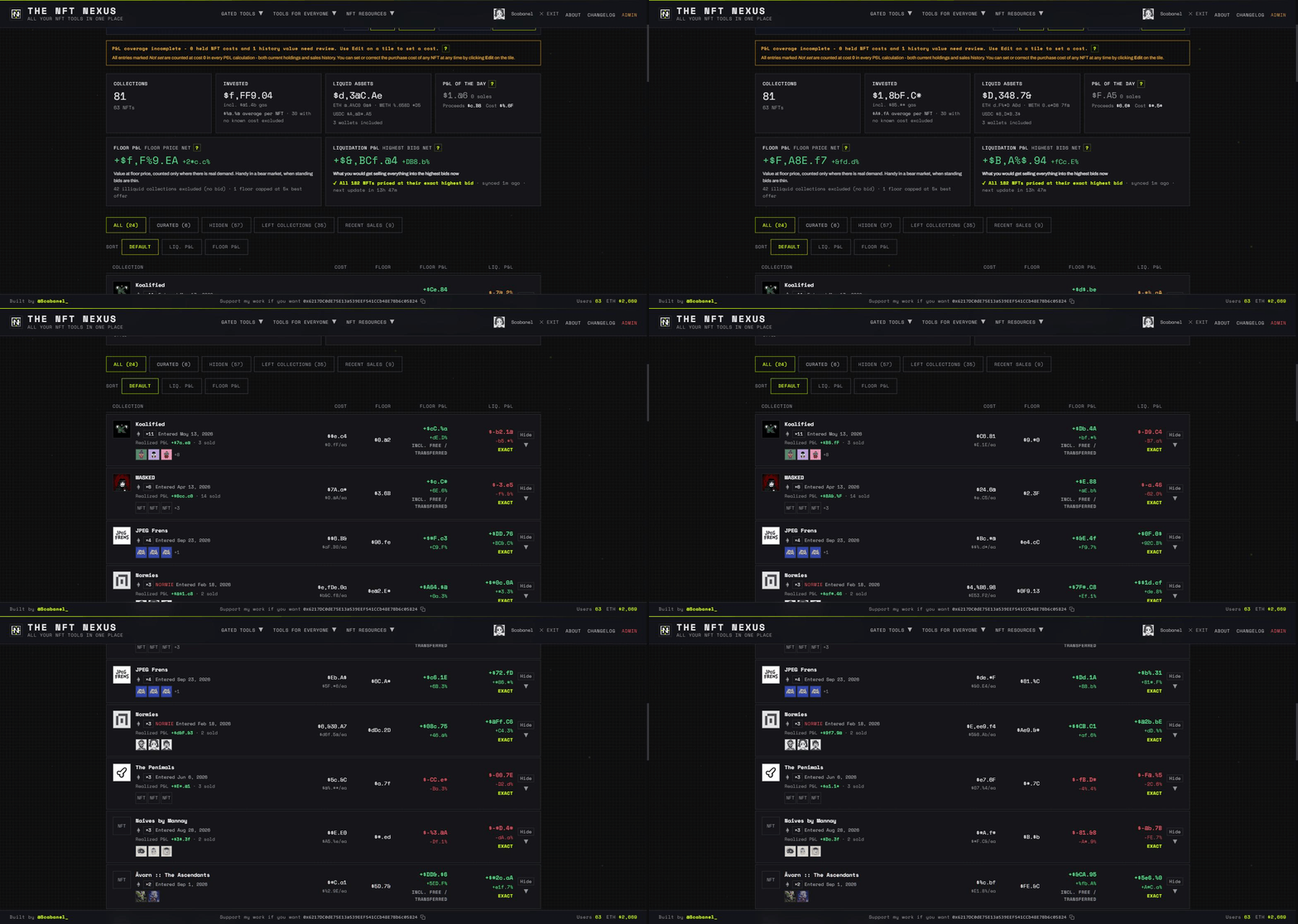
Two of these tools, the portfolio manager and the profit-and-loss calculator, are the ones that won the hackathon and the ones I’ve kept updating because more than 60 people use them regularly (including me).
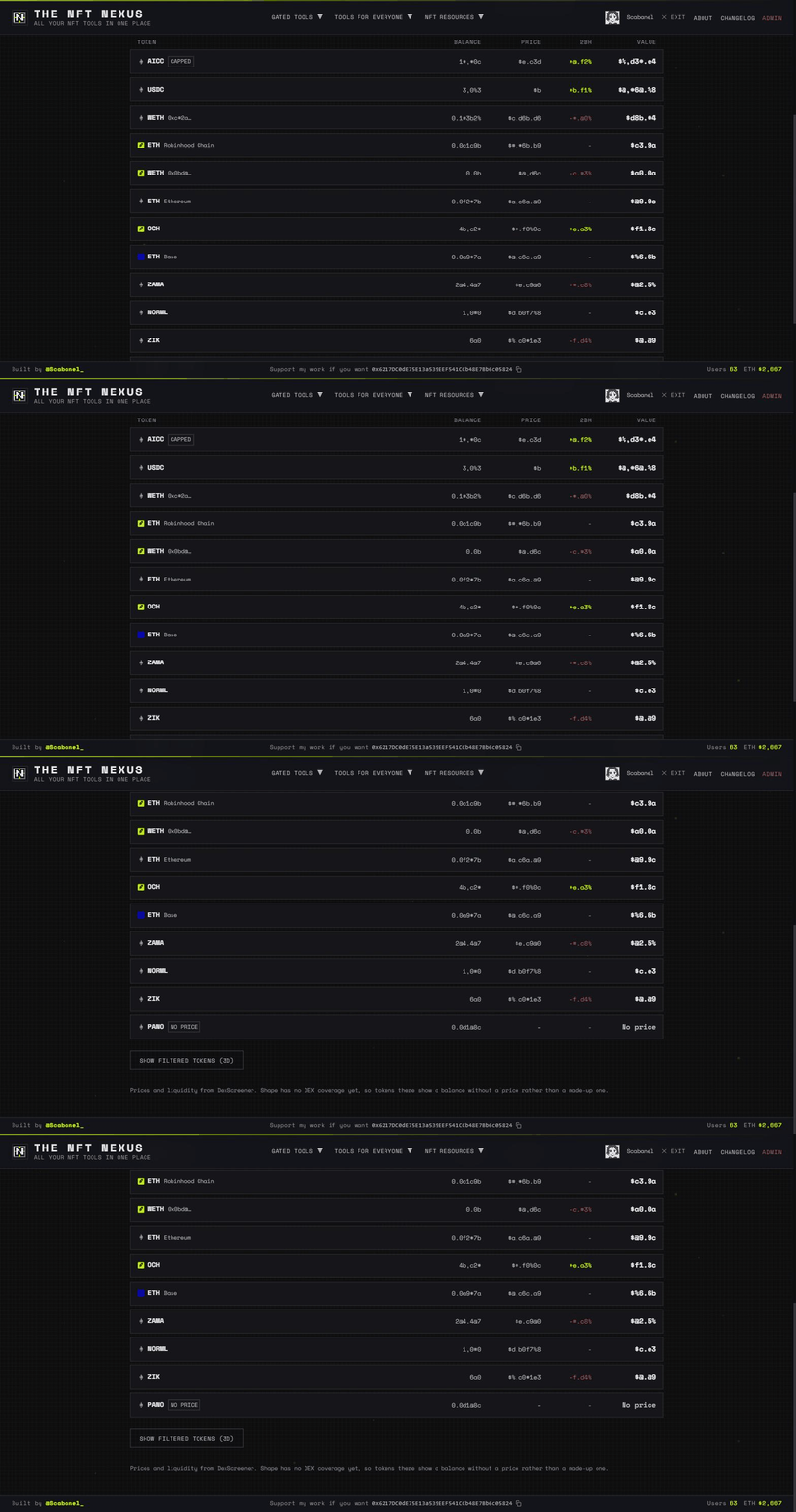
None of this existed eight months ago.
I haven’t been a professional developer for years: I moved through marketing, strategy, technical project leadership, before positioning myself as a tech CMO.
What I do know how to do, though, is use AI to build fast, and especially to see a tool through to the end, something that’s both useful for marketing and a solution to a very specific need.
That’s the point I want to stress here, because it’s the one that should matter to you: AI didn’t just save me time on a prototype I’d later have someone else develop.
It let me ship a real product, used daily by dozens of people, with real bugs, real updates, and a real load to handle, while also giving me actionable content to showcase my company’s services.
Of course, what I built for myself, I also build with the companies I work with, creating tools they’ll use every day.
The “second brain” behind it all
I mentioned my knowledge vault in a previous article: for months I’ve kept a personal knowledge base, a “vault”, where I log every technical decision, every incident, every lesson learned on a project, both mine and my clients’.
Every technical incident, every product positioning to refine, every piece of content created as a result, and every nugget of knowledge to store didn’t stay in my head: they became a note, with exact context, a measure of the problem, and the applied fix. This vault now holds hundreds of such notes, and I use it to never repeat the same mistake on any project.
Basically, I’m training an AI-driven system while sharpening my ideas and skills at the same time.
The word “assistant” really makes sense here, I’d say.
It’s also this vault that let me write this post so quickly: the material was already there, structured, ready to reuse, and I just had to rewrite it in my style and then teach the vault the phrasing differences to speed up future production even more.
And that brings me to the real subject of this post.
Reusing everything we build, everything you build, everything you have in mind.
When you use AI, whether it’s to develop an app, store knowledge, or automate internal processes, you have to think about reuse.
If we take the example of NFT Nexus, every feature I delivered automatically triggered the production of a demo GIF for that feature, ready to be posted on X.
Development and go-to-market in one go, without the back-and-forth between a tech team and a marketing team that never talk fast enough (it’s as much your frustration as mine)
The distribution tools I built for my own live streams on this project (you can find them in the Media section of this site) I reuse them today for my clients.
None of that is wasted R&D: it’s a permanent test bench that everything I build later benefits from. Over time, it becomes a real war machine, except this one is maintainable in the long run without turning into an overengineered monster for your teams.
And this article itself is an example. A free Web3 project, funded out of my own pocket, with no business model, becomes a concrete proof of competence for my tech CMO work, in B2B, in a completely different industry.
So on your side, as a company, everything you produce has to be part of a knowledge accumulation and reuse cycle!
A private working note can become the article you’re reading, so you might as well not hold back.
That’s exactly the approach I bring to my clients: I never separate building the product from showcasing it.
Both are thought of together from the start, because separating them is the best way to lose half the value of what we build.
How can what I do, and the way I work, benefit you?
If you run a company and wonder how AI can actually help you and your team, beyond the corporate spiel from every AI vendor out there, here are three points to keep in mind about what it can bring you when you work with me:
-
First, working with someone who can accumulate and reuse knowledge quickly. I knew nothing about Web3 a year ago. That’s exactly the situation I find myself in on every new assignment: showing up at a client whose business I don’t yet master, it can happen and in that case I have to become operational fast. Really fast.
-
Next, the ability to build end-to-end AI products, not just mockups. A tool used by real people that solves a specific need within your company. Because a CMO shouldn’t just drive external activity, it also has to help you optimize what’s happening internally.
- Finally, having the reflex to never separate what you build from what you tell and sell. That’s your priority when it comes to marketing; your marketing team must constantly keep the reuse of what’s built in mind, even internally, to support your company’s strategic goals. Otherwise it will become yet another isolated action that seems like a waste of time and money to you.
If this resonates with you, I’ve gathered on my site how I concretely use AI daily, both in my client work and personal projects: Useful AI.
You’ll find the same principle at work, this time applied directly for the benefit of my clients.
We’ll look together at what a system like this could change for your team, with what you already have in place.